WELL Health Diagnostic Centres

Diagnostic Tests

X-ray (Walk-in Service)

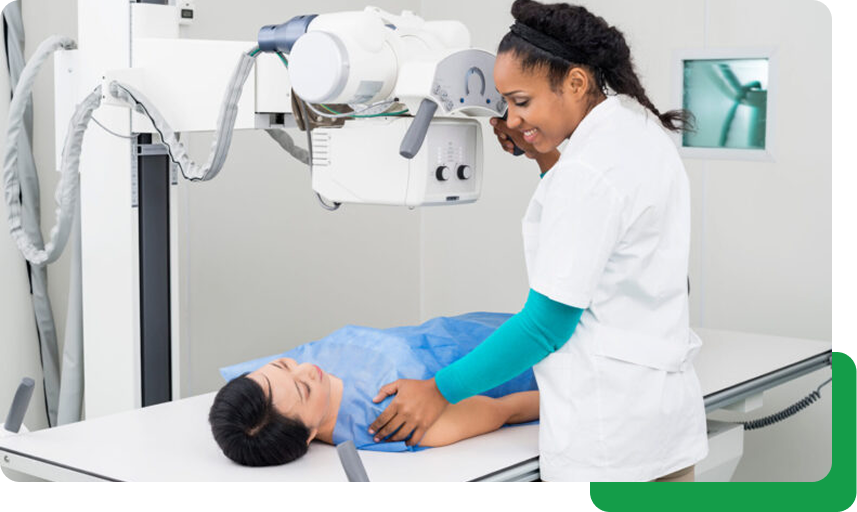
X-rays are a common type of imaging scan used to view the body beyond the soft tissue. X-rays pass through your body, and they are absorbed in different amounts depending on the density of the material they pass through. Dense materials, such as bone and metal, appear white on X-rays. The air in your lungs appear black, and fat and muscle appear as shades of gray.

Please Note: WELL Health Diagnostic Centres have discontinued the use of lead shielding for X-ray services. Please click here for more information and frequently asked questions.

X-ray technology is used to examine many parts of the body, including:

Abdominal X-ray

  • Digestive Tract Problems
  • Swallowed Items – If your child has swallowed something like a key or a coin, an X-ray can show the location of that object.

X-ray (Walk-in Service)

X-rays are a common type of imaging scan used to view the body beyond the soft tissue. X-rays pass through your body, and they are absorbed in different amounts depending on the density of the material they pass through. Dense materials, such as bone and metal, appear white on X-rays. The air in your lungs appear black, and fat and muscle appear as shades of gray.

Please Note: WELL Health Diagnostic Centres have discontinued the use of lead shielding for X-ray services. Please click here for more information and frequently asked questions.

X-ray technology is used to examine many parts of the body, including:

Abdominal X-ray

  • Digestive Tract Problems
  • Swallowed Items – If your child has swallowed something like a key or a coin, an X-ray can show the location of that object.


Bone X-ray:

  • Fractures and Infections – In most cases, fractures and infections in bones show up clearly on X-rays.
  • Arthritis – X-rays of your joints can reveal signs of arthritis. X-rays taken over the years can help your doctor determine if your arthritis is worsening.
  • Osteoporosis – Special types of X-ray tests can measure bone mineral density.
  • Bone cancer – X-rays can reveal bone tumors.
  • Head & Neck – Includes neck, skull, sinuses (not insured by OHIP), facial bones, nose, mandible, orbits, temporomandibular (TM) joints, and adenoids.
  • Lower & Upper Extremities
  • Spine & Pelvis


Chest X-ray:

  • Lung Infections or Conditions – Evidence of pneumonia, tuberculosis or lung cancer can show up on chest X-rays.
  • Enlarged Heart – This sign of heart failure shows up clearly on X-rays.
  • Blocked Blood Vessels – Changes in blood flow to the lungs and heart can be seen on chest X-rays.
 

Immigration Chest X-ray (Not insured by OHIP):

An immigration medical examination, which includes a chest X-ray, is a mandatory requirement of Immigration, Refugees, and Citizenship Canada (IRCC). This chest X-ray is used to detect active tuberculosis for patients ages 11+ years prior to their arrival in Canada, to ensure they are treated and no longer infectious upon their arrival. These exams can only be requested by IRCC-approved doctors. Applicants must bring their immigration medical examination, unique medical identifier, or unique client identifier numbers with them to their walk-in X-ray exam.