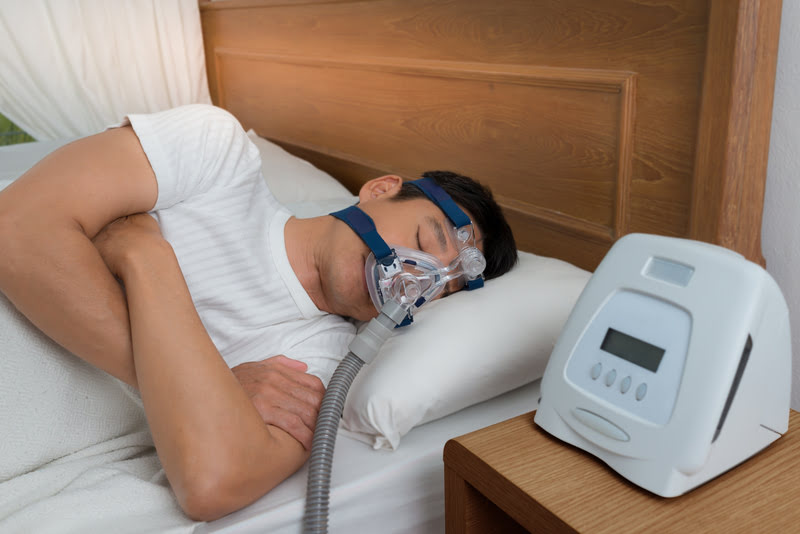
A sleep study test is a diagnostic procedure that records multiple body systems simultaneously while you sleep. It is used to identify and classify sleep disorders that cannot be diagnosed through a clinical interview or daytime assessment alone. The results guide treatment decisions for conditions including sleep apnea, narcolepsy, and restless leg syndrome.
Key Takeaways
- Multi-system recording: A sleep study monitors brain activity, breathing, oxygen levels, heart rate, eye movement, and limb movement simultaneously.
- Performed overnight: Most sleep studies run through a full night of sleep, either in a laboratory or at home.
- Ordered for specific symptoms: Physicians order it when patients report chronic snoring, excessive daytime sleepiness, interrupted breathing, or poor sleep quality.
- Requires a referral in Ontario: A signed requisition from a licensed healthcare provider is needed to access publicly funded sleep studies.
Interpreted by a sleep specialist: A trained specialist reviews the full recording and prepares a diagnostic report for your physician.
When a Sleep Study Test Is Required
Physicians order a sleep study when a patient’s reported symptoms suggest a sleep disorder that requires objective measurement to diagnose. Common referral triggers include chronic loud snoring, observed pauses in breathing during sleep, waking with headaches, and excessive daytime sleepiness that interferes with daily function. Symptoms alone are not sufficient to confirm a diagnosis, the sleep study provides the physiological data needed to classify the disorder and determine severity.
- Suspected obstructive sleep apnea: Snoring, observed apnoeas, or morning headaches in combination with daytime fatigue.
- Excessive daytime sleepiness: When the cause is unclear and conditions such as narcolepsy need to be ruled in or out.
- Restless leg syndrome or PLMD: When limb movements are suspected to be disrupting sleep architecture.
- REM sleep behaviour disorder: When patients act out dreams or report violent movements during sleep.
- Unexplained insomnia: When behavioural and environmental factors have been addressed without improvement.
What a Sleep Study Test Measures
HealthLink BC’s sleep studies resource, published by the British Columbia government, explains that a sleep study records brain waves, oxygen levels in the blood, heart rate, breathing patterns, and eye and leg movements. These signals are collected simultaneously throughout the night using sensors and electrodes attached to the scalp, face, chest, and limbs.
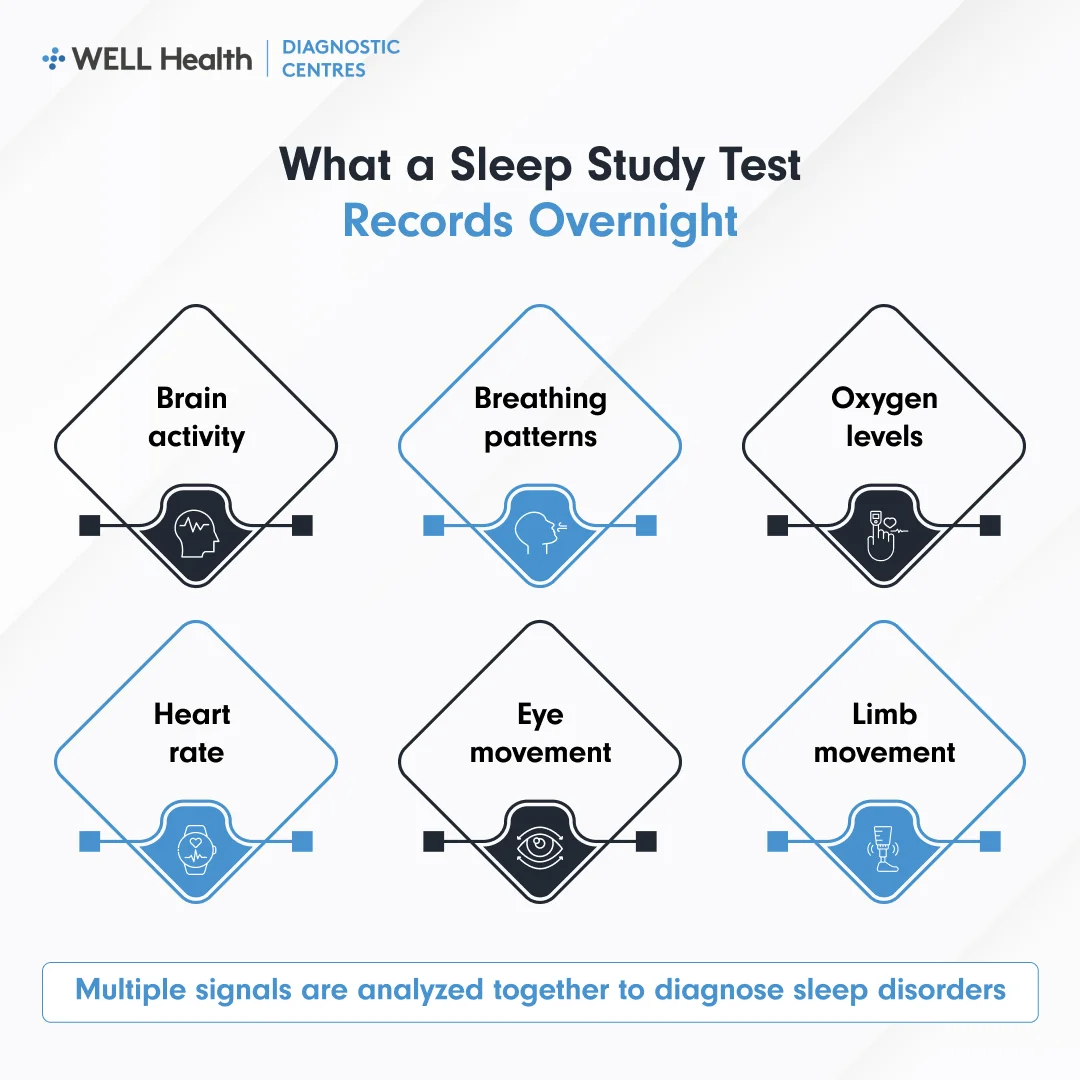
The combination of data channels allows the sleep specialist to identify when sleep begins and ends, which sleep stages occur and in what proportion, whether breathing is disrupted, and how the body responds to those disruptions. No single channel is diagnostic on its own, the value of the sleep study lies in correlating all recorded signals together.
Types of Sleep Studies Used in Diagnosis
The type of sleep study ordered depends on the suspected condition and the clinical resources available.
Level 1 Polysomnography (In-Laboratory)
A Level 1 polysomnography (PSG) is a full overnight sleep study conducted in a supervised laboratory. A health technology assessment published by the Ontario Health Technology Advisory Committee confirms that Level 1 PSG is the only currently publicly funded option for diagnosing sleep disorders in Ontario.
It is considered the reference standard because it captures the most comprehensive set of neurophysiological measurements under direct observation.
Level 2 Polysomnography (Home-Based)
A Level 2 sleep study uses the same sensor array as in-laboratory polysomnography but is conducted at home without direct supervision. The BC government’s diagnostic sleep standards document notes that Level 1 studies are considered the gold standard because they provide neurophysiological measurements that accurately distinguish sleep from wakefulness to chart sleep-wake cycles.
Level 2 studies are used when in-laboratory access is limited or when the patient’s condition is unlikely to require supervised recording.
Multiple Sleep Latency Test (MSLT)
The MSLT is a daytime study that measures how quickly a patient falls asleep across several scheduled nap opportunities. It is used specifically to assess for narcolepsy and other conditions associated with pathological daytime sleepiness. HealthLink BC describes it as a test that determines whether the patient enters REM sleep during these brief sleep periods, which is a diagnostic marker for narcolepsy.
What Happens During the Test
For an in-laboratory study, you arrive at the sleep facility in the evening and go through an electrode fitting process. Small sensors are attached to the scalp, face, chest, legs, and fingertips to capture the required data channels. The setup takes approximately 30 to 60 minutes before you go to sleep.
Lights-out is typically between 10 and 11 PM, and the recording continues until you wake in the morning. A sleep technician monitors the recording from an adjacent room throughout the night and can respond if the sensors need adjustment. The sensors are removed after the recording is complete, and there is no recovery period required.
How Sleep Data Is Interpreted
The recorded data is analyzed by a sleep specialist using defined scoring criteria. Key metrics reported include the Apnea-Hypopnea Index (AHI), which counts the number of breathing disruptions per hour of sleep; oxygen saturation nadir; sleep efficiency; total sleep time; and time spent in each sleep stage. A diagnosis of obstructive sleep apnea requires an AHI of 5 or more events per hour in combination with clinical symptoms.
- AHI 5–14: Mild sleep apnea; lifestyle modification and positional therapy are typically the first interventions.
- AHI 15–29: Moderate sleep apnea; CPAP therapy is the standard clinical recommendation.
- AHI 30 or above: Severe sleep apnea; CPAP therapy is indicated and regular follow-up is required.
- Normal AHI with poor sleep: Further investigation may include MSLT, insomnia-focused evaluation, or circadian rhythm assessment.
How Results Are Reported After the Sleep Study
The sleep specialist prepares a written report and transmits it to your referring physician. Your physician reviews the findings and contacts you to discuss the diagnosis and recommended treatment. If a CPAP device is prescribed, a separate titration study or auto-CPAP trial may be arranged to determine the appropriate pressure setting.
Frequently Asked Questions
What does a sleep study test diagnose?
A sleep study is used to diagnose obstructive sleep apnea, central sleep apnea, narcolepsy, periodic limb movement disorder, REM sleep behaviour disorder, and other conditions that disrupt normal sleep architecture. The specific diagnosis depends on which physiological markers are abnormal in the recording. A normal sleep study is also informative, it can rule out these conditions and redirect the clinical investigation.
Is a sleep study covered by OHIP in Ontario?
In-laboratory Level 1 polysomnography is the only publicly funded sleep study option in Ontario. It requires a referral from a licensed Ontario healthcare provider and is performed at a hospital or independent health facility with Ministry of Health accreditation. Ask your physician whether the sleep lab they refer to is an OHIP-covered facility when the referral is arranged.
Can a home sleep test replace an in-laboratory study?
A home sleep test can provide sufficient data to diagnose obstructive sleep apnea in patients with a high pre-test probability. However, it cannot capture the full neurophysiological data required to assess narcolepsy, REM sleep disorders, or complex sleep architecture. Your sleep specialist will advise which level of testing is appropriate based on your clinical presentation.
Sleep Study Testing as a Diagnostic Starting Point
A sleep study test provides objective, multi-channel data that cannot be gathered any other way. It identifies whether a sleep disorder is present, classifies its type, and measures its severity. The report gives your physician and sleep specialist the information they need to recommend an appropriate, evidence-based treatment plan.