An abnormal mammogram result means the radiologist identified something that needs a closer look. It does not confirm cancer. Most patients who are called back after screening are found to have benign findings after follow-up imaging.
Key Takeaways
- Abnormal does not mean cancer: Most abnormal screening results are resolved as benign after diagnostic follow-up.
- You will be contacted: In Ontario, patients are notified by phone, mail, or through their physician after an abnormal result.
- Follow-up is arranged quickly: Diagnostic imaging is typically scheduled within a defined clinical window after the callback.
- BI-RADS guides next steps: The radiologist assigns a BI-RADS category that determines what follow-up, if any, is recommended.
- A physician reviews findings: Your referring doctor or the OBSP coordinates next steps and communicates results with you.
What an Abnormal Mammogram Indicates
An abnormal result on a screening mammogram means the images contained something the radiologist wants to assess further. Common causes include dense breast tissue, overlapping tissue structures, cysts, calcifications, or a mass. The radiologist uses the Breast Imaging Reporting and Data System (BI-RADS) to categorize findings on a scale from 0 to 6.
A BI-RADS 0 result is the most common outcome of an abnormal screening mammogram. It means the imaging is incomplete and additional views are needed before a final interpretation can be made. This does not indicate a diagnosis and does not mean cancer has been found.
Abnormal Mammogram Next Steps in Clinical Practice

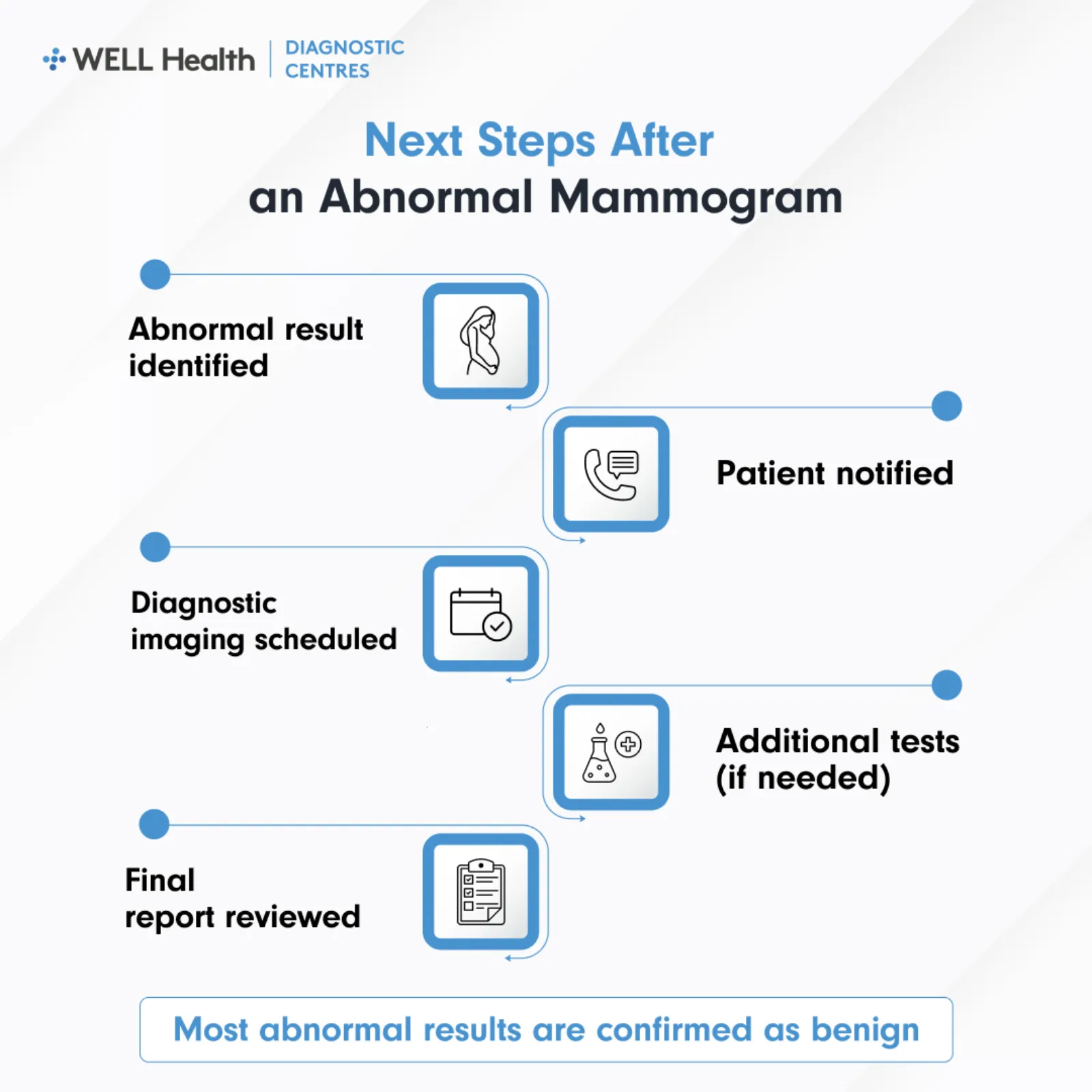
The Cancer Care Ontario follow-up guidelines for abnormal breast screens outline the steps that follow a flagged mammogram result in Ontario. OBSP sites can arrange additional imaging, including diagnostic mammography, ultrasound, and biopsy, using a Primary Care Provider Authorization form without requiring a new requisition from your family doctor.
Notification
After an abnormal screening result, patients in Ontario are contacted by phone or mail. If you are enrolled in the OBSP, the program handles notification directly. If your primary care provider ordered the mammogram, they receive the report and contact you to discuss next steps.
Diagnostic Imaging Referral
The next step is typically a diagnostic mammogram, breast ultrasound, or both. The Canadian Partnership Against Cancer’s abnormal mammogram follow-up report notes that the location for follow-up diagnostic imaging varies across provinces — some arrange it at the original screening site, others refer to a dedicated diagnostic imaging centre or breast assessment unit.
Timeline for Follow-Up Appointments
Follow-up imaging is typically scheduled within a clinically appropriate window after the callback. Most Canadian breast screening programs track follow-up rates and aim to complete diagnostic assessment within 5 weeks of an abnormal result. If you have not been contacted within a few days of your expected result date, contact your physician or the screening program directly.
Additional Imaging and Diagnostic Tests
Depending on the initial finding, one or more of the following imaging tests may be arranged.
- Diagnostic mammogram: Additional views of the flagged area using spot compression or magnification techniques.
- Breast ultrasound: Used to assess if a finding is a fluid-filled cyst or a solid mass requiring further evaluation.
- Breast MRI: Ordered in specific clinical situations, including high-risk patients or when other imaging is inconclusive.
- Core needle biopsy: A small tissue sample is taken from the area of concern for laboratory analysis if imaging remains suspicious.
How Results Are Communicated
Diagnostic imaging results go to your referring physician or OBSP provider, who contacts you to discuss findings. Radiologists report findings using the BI-RADS system, which gives your physician a clear category to guide the next clinical step. If a biopsy is required, the pathology report is sent to your physician, who communicates the outcome and outlines next steps.
When Further Evaluation Is Required
Not all abnormal mammograms lead to biopsy. BI-RADS 3 findings are considered probably benign and typically require a short-interval follow-up imaging appointment in 6 months rather than immediate biopsy. BI-RADS 4 and 5 findings are classified as suspicious or highly suspicious and generally lead to a biopsy recommendation.
Research published in peer-reviewed literature indicates that fewer than 1 in 10 patients called back after screening are ultimately found to have cancer. The callback process exists to confirm that findings are benign, not to indicate that cancer is present.
Frequently Asked Questions
How long does it take to get follow-up imaging after an abnormal mammogram?
In Ontario, most breast screening programs aim to complete diagnostic assessment within 5 weeks of an abnormal result. The Cancer Care Ontario follow-up guidelines set defined targets for assessment timelines after an abnormal screen. If you have not been contacted within your expected window, follow up with your physician or the OBSP program directly.
Does an abnormal mammogram mean I have breast cancer?
No. An abnormal mammogram means the radiologist saw something that requires a closer look, not that cancer has been found. The most common outcome of a callback is a benign finding confirmed on follow-up imaging. A definitive cancer diagnosis requires biopsy and pathology, not imaging alone.
Will I need a biopsy after my follow-up imaging?
Not necessarily. Most patients who receive follow-up imaging are found to have benign findings and are returned to their regular screening schedule. Biopsy is typically recommended only when follow-up imaging produces a BI-RADS 4 or 5 result, indicating a suspicious or highly suspicious finding.
What to Do After Your Abnormal Mammogram Result
Contact your physician or the OBSP program if you have not received follow-up instructions within a few days of your expected result date. Attend the follow-up imaging appointment as scheduled and bring any prior imaging records or reports that may be relevant. Your physician or the OBSP coordinator will walk you through each step and answer questions about what your specific result means.