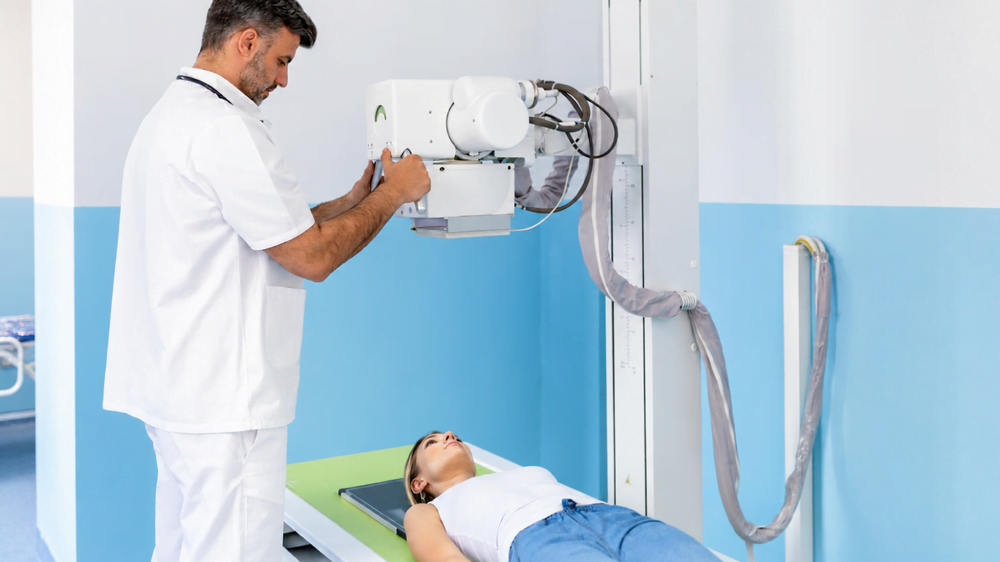
A DEXA scan uses low-dose X-ray to produce bone mineral density readings at the hip and lumbar spine. The procedure is quick, painless, and requires no fasting. A small number of preparation steps are required to ensure the imaging is not distorted by external materials or substances that interfere with how X-ray energy is absorbed by tissue.
Key Takeaways
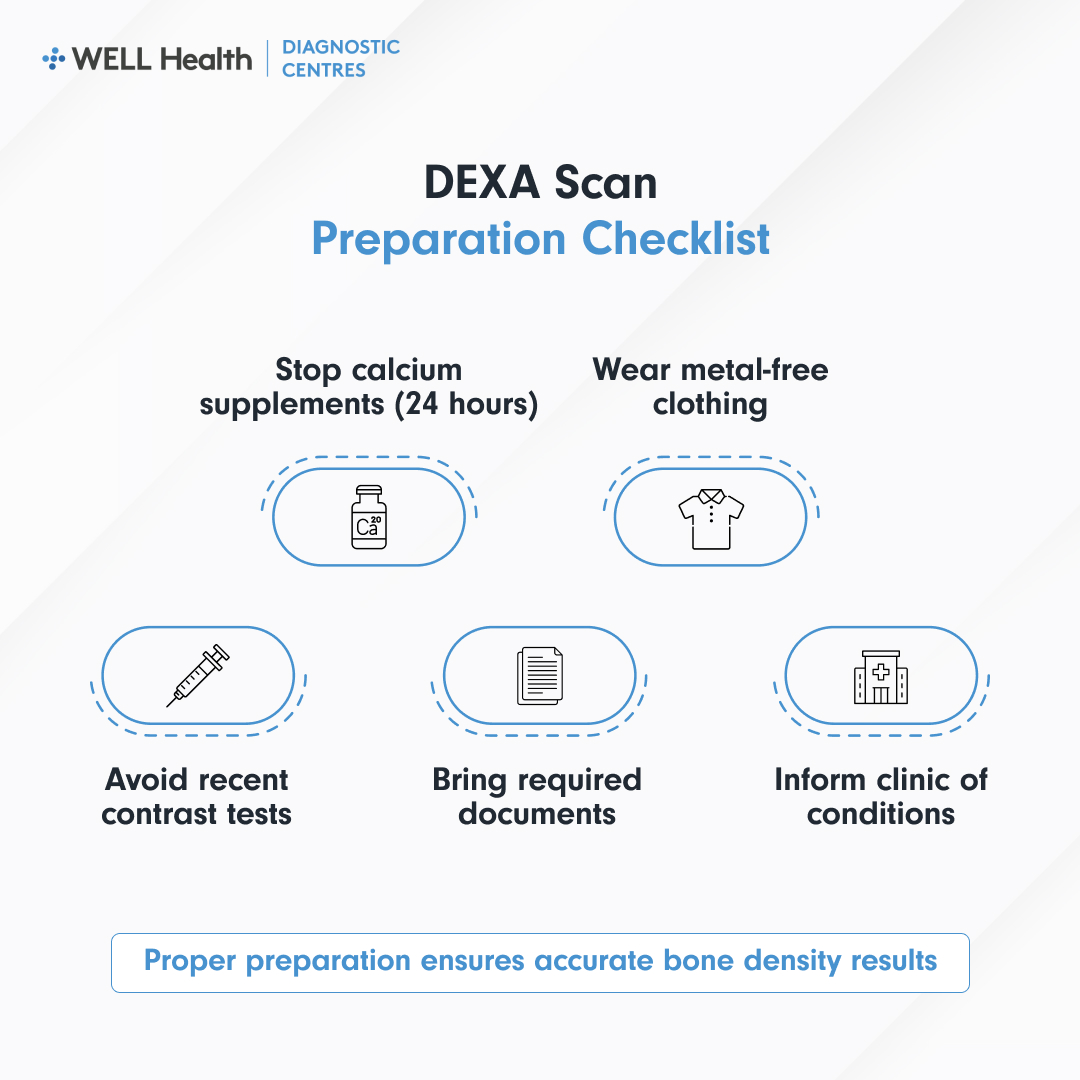
- Stop calcium supplements 24 hours before: Calcium tablets, multivitamins, and antacids containing calcium all need to be paused the day before your appointment.
- Fasting is not required: You can eat and drink normally. The only dietary restriction is supplemental calcium.
- Wear metal-free clothing: Zippers, underwire, and metal buttons in the scan area interfere with the X-ray and must be avoided.
- Wait after contrast studies: A 10 to 14-day gap is required after CT contrast, barium studies, or nuclear medicine scans.
- Use the same machine for repeat scans: Follow-up scans should be done at the same facility for results to be directly comparable over time.
Purpose of a DEXA Scan
The DEXA scan, Dual-Energy X-ray Absorptiometry, is the clinical standard for diagnosing osteoporosis and assessing fracture risk. According to the RadiologyInfo.org DEXA scan patient guide published by the Radiological Society of North America, DXA is simple, quick, and the most commonly used and standard method for diagnosing osteoporosis. It is ordered for postmenopausal women, men over 50, and patients with clinical risk factors for bone loss including long-term corticosteroid use and prior fragility fractures.
How to Prepare for a DEXA Scan
Most DEXA scan preparation steps are about eliminating interference with the low-dose X-ray imaging. The RadiologyInfo.org DEXA guide states that on the day of the exam, you may eat normally, and that the main preparation requirement is to stop taking calcium supplements for at least 24 hours before the test.
Calcium Supplements
Calcium supplements, including multivitamins and antacids containing calcium such as Tums, must be stopped at least 24 hours before your appointment. Supplemental calcium can affect how X-ray energy is absorbed, potentially producing an inflated bone density reading that does not accurately reflect your bone tissue. Foods naturally containing calcium do not need to be restricted; this applies only to supplements taken in tablet, capsule, or chewable form.
Medications
Continue all prescribed medications on your normal schedule unless your healthcare provider gives specific instructions otherwise. The RadiologyInfo.org DEXA guide confirms that no medication changes are required for a standard bone density scan. Inform the clinic if you are taking medications that may affect bone metabolism, such as corticosteroids, aromatase inhibitors, or androgen deprivation therapy, so the radiologist can note these when interpreting your results.
Recent Contrast or Radioisotope Studies
If you have recently had a CT scan with contrast material, a gastrointestinal barium study, or a nuclear medicine radioisotope scan, you may need to wait 10 to 14 days before your DEXA appointment. Residual contrast agents or radiotracers in the body can interfere with the DXA X-ray beams and affect the accuracy of bone density readings. Notify your referring physician and the imaging clinic when booking if you have had any of these procedures recently.
Clothing and Preparation Guidelines
Clothing choices directly affect scan quality. Metal objects in the scan field obstruct the X-ray beams and can cause errors in the density calculation.
- Wear metal-free clothing: Loose-fitting athletic wear without zippers, metal buttons, or underwire is ideal. Avoid jeans, belts, and structured garments.
- Leave jewelry at home: Necklaces, earrings, watches, and any metal accessories near the scan area must be removed before the exam.
- No gown change usually required: If your clothing is metal-free, you typically stay fully clothed. The clinic will provide a gown if needed.
- Remove keys and wallets: Any metal objects in pockets over the hip or spine scan region must be set aside before positioning.
Factors That Affect Scan Accuracy
Several factors beyond clothing and supplements can affect the reliability of a DEXA result. Informing your clinic about these in advance allows the radiologist to account for them when preparing the final report.
Spinal Deformities and Prior Surgery
The RadiologyInfo.org DEXA guide notes that the test is of limited use in patients with spinal deformity or those who have had previous spinal surgery. Vertebral compression fractures and advanced osteoarthritis can artificially elevate the lumbar spine bone density reading because of increased sclerosis in the affected vertebrae. In these cases, the radiologist focuses on the hip measurement or notes the limitation in the report.
Consistency Across Repeat Scans
Follow-up DXA exams should be performed at the same facility and ideally on the same machine. The RadiologyInfo.org guide confirms that bone density values obtained on different DXA equipment cannot be directly compared. When monitoring treatment response over time, consistent use of the same scanning equipment is important for detecting true changes in bone density rather than machine-to-machine variation.
Pregnancy
DEXA scans are not performed during pregnancy because of the radiation exposure, however small. Inform your physician and the clinic at the time of booking if there is a possibility you may be pregnant. Your physician will advise on the appropriate time to schedule the scan after delivery.
What Happens During the Scan
You lie on a padded table while a low-dose X-ray arm passes slowly over your hip and lower spine. The full scan takes approximately 10 to 20 minutes. You remain fully clothed unless your clothing required removal, and no injections, preparation procedures, or recovery time are needed. The technologist may ask you to hold a specific position for each region being scanned to ensure reproducible image geometry.
After the Scan: Results and Reporting
A radiologist or bone densitometry specialist reviews the DXA images and produces a written report. The report includes your T-score, Z-score, FRAX fracture probability, and any clinical notes about scan quality or confounding factors. This report is sent to your referring physician, who discusses findings with you at a follow-up appointment and advises on next steps based on your full clinical profile.
Frequently Asked Questions
Do I need to fast before a DEXA scan?
No fasting is required before a DEXA scan. You can eat and drink normally on the day of the appointment. The only restriction is supplemental calcium, which should be stopped at least 24 hours before the scan to avoid interference with the bone density reading.
Can I take my prescription medications before a DEXA scan?
Yes. All prescribed medications should be taken on your normal schedule before a DEXA scan. The RadiologyInfo.org DEXA guide confirms that no medication changes are required for a standard bone density test. If you have questions about a specific medication and its effect on your result, ask your physician at the time of referral.
How often should a DEXA scan be repeated?
Repeat testing is typically recommended 1 to 2 years after starting or changing osteoporosis treatment to assess response. For patients not currently being treated, repeat scanning is guided by how close their T-score is to the treatment threshold. Your physician determines the appropriate interval based on your individual clinical circumstances and risk profile.
Prepared Patients Get Accurate Results
The preparation steps for a DEXA scan are simple and take less than a day to execute. Stopping calcium supplements and wearing appropriate clothing are the two steps that most directly affect the quality of your result. If anything is unclear before your appointment, contact the imaging clinic, they can confirm the preparation specific to your scan and clinical situation.
Sources
- Radiological Society of North America. “DEXA Scan (Bone Densitometry).” RadiologyInfo.org. https://www.radiologyinfo.org/en/info/dexa