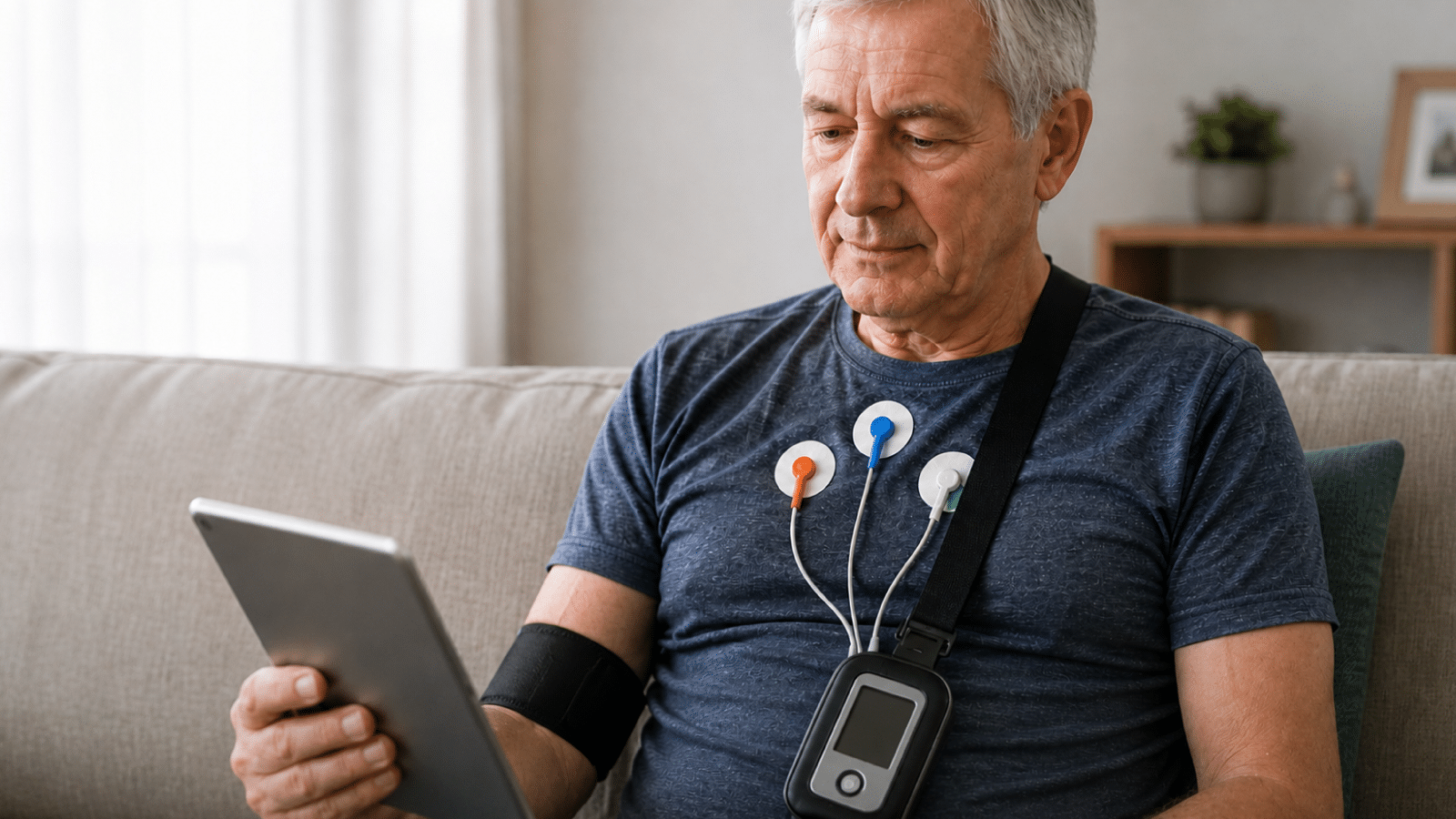
A Holter monitor records your heart’s electrical activity over 24 to 48 hours. Unlike a standard ECG, which captures only a few seconds of rhythm, the Holter provides a continuous record of how your heart behaves during normal daily activity. The results help physicians detect arrhythmias and rhythm abnormalities that occur unpredictably and cannot be captured in a brief clinic test.
What a Holter Monitor Records
The Holter monitor uses electrodes placed on the chest to continuously record the electrical signals of the heart. RadiologyInfo.org’s Holter monitoring overview, published by the Radiological Society of North America, describes the device as a portable recorder that produces a long-term ECG used to investigate symptoms such as palpitations, dizziness, or unexplained fainting. The continuous recording captures heart rate, rhythm, and any deviations from normal patterns across the full monitoring period.
During the recording period, patients keep a written diary of symptoms and activities. The time-stamped diary entries are matched to corresponding sections of the recording during analysis. This correlation is what makes the Holter test clinically useful, it links what you felt to what the heart was doing at that moment.
Holter Monitor Results: What They Show

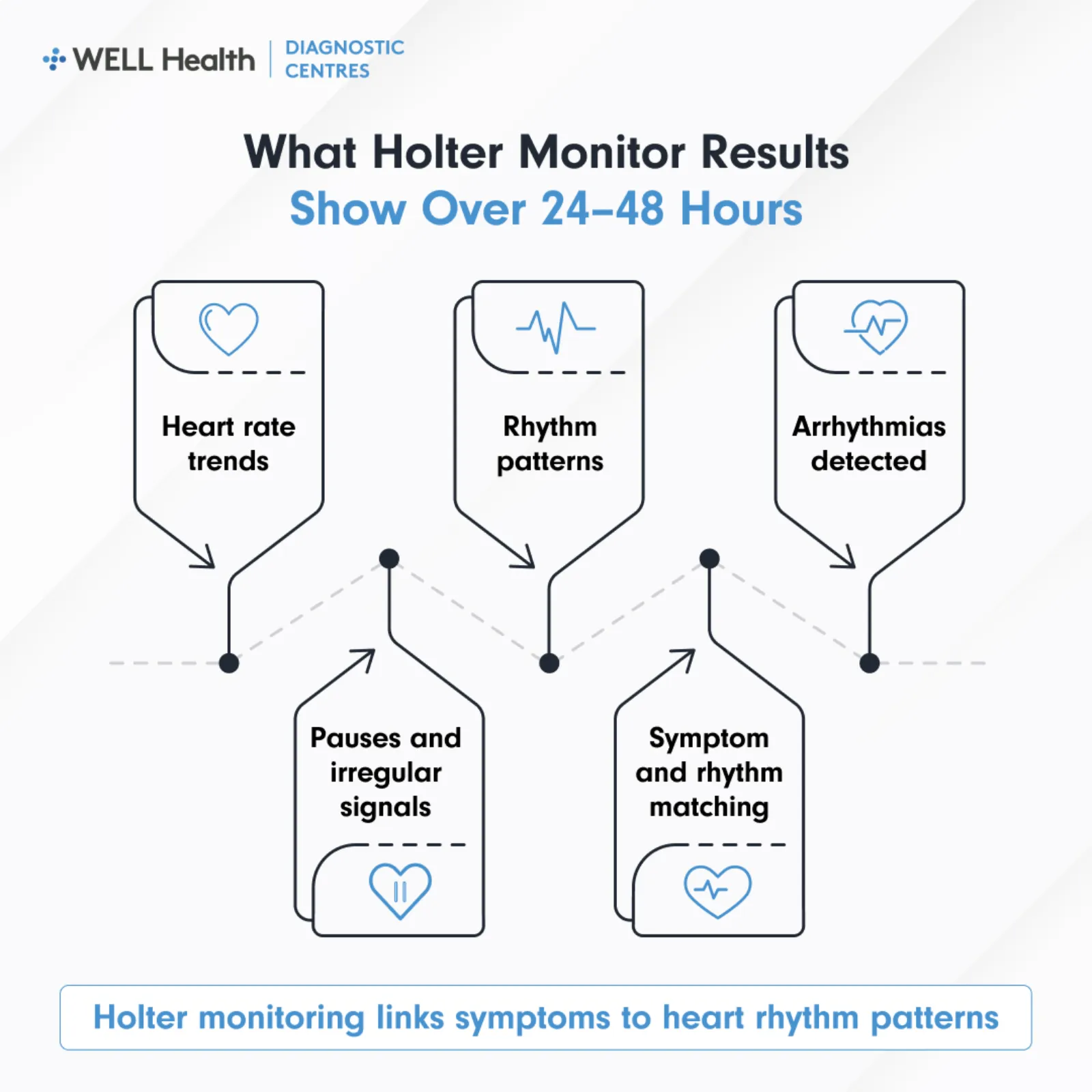
A Holter monitor gives doctors a longer look at your heart rhythm than a standard ECG can provide. Because it records continuously during normal daily activities and sleep, it can capture rhythm changes that may not happen during a short clinic visit. The results help your cardiology team see how your heart rate behaves over time, if there are any abnormal rhythms occur, and if your symptoms match any changes in the recording.
Heart Rate and Rhythm Overview
The report includes your average, minimum, and maximum heart rate across the monitoring period. It notes the total number of beats recorded and identifies any periods where the rate was outside the normal range. These baseline metrics help the cardiologist assess if rate-related symptoms have a measurable correlate.
Arrhythmias
The most common reason for Holter monitoring is to detect arrhythmias, abnormal heart rhythms. The recording can identify atrial fibrillation, supraventricular tachycardia, ventricular tachycardia, premature atrial contractions (PACs), and premature ventricular contractions (PVCs).
Research published in Medmastery’s clinical cardiology resources notes that atrial fibrillation is the most common sustained arrhythmia identified on Holter recordings, identified by its irregularly irregular character and the absence of a consistent P wave.
Pauses and Conduction Abnormalities
A pause occurs when the heart stops producing an electrical signal for an abnormal period. Clinically significant pauses are defined as those exceeding 3 seconds during waking hours or longer during sleep.
Conduction abnormalities, including bundle branch blocks and atrioventricular blocks, are also documented in the Holter report.
Symptom-Rhythm Correlation
The analysis compares the timing of your reported symptoms to the heart’s recorded activity. If your diary shows palpitations at 10:42 AM, the cardiologist checks if the ECG trace at that moment shows an abnormal rhythm.
A clear correlation supports a diagnosis; the absence of a rhythm abnormality during a symptom can also be clinically meaningful, as it helps exclude a cardiac cause.
How Data Is Reviewed and Interpreted
After the monitoring period ends, the device is returned to the clinic and the recording is analyzed. A cardiologist or cardiac physiologist reviews the full dataset using specialized software that flags potential events for manual review. The final report is sent to your referring physician, who contacts you to discuss the findings.
The report typically includes a summary of total heart rate data, arrhythmia counts, any clinically significant events, and the symptom-rhythm correlation. A normal Holter result is one where no clinically significant arrhythmia is detected and any symptoms logged in the diary did not correspond to an abnormal rhythm. This outcome provides useful information to your physician even without an abnormal finding.
Common Findings in Holter Monitoring
Holter monitoring can reveal several types of rhythm changes, ranging from harmless early beats to patterns that may need closer evaluation. Not every finding is automatically serious, so doctors interpret the results based on how often the rhythm change occurs, how long it lasts, if symptoms happen at the same time, and the patient’s overall health history.
- Atrial fibrillation: An irregular, rapid rhythm with no consistent P wave, the most common sustained arrhythmia on Holter recording.
- PVCs and PACs: Isolated early beats from the ventricles or atria, common and often benign unless frequent or symptomatic.
- Supraventricular tachycardia: Rapid rhythm originating above the ventricles, often felt as a sudden racing heartbeat.
- Bradycardia: Sustained heart rate below 60 beats per minute, which may be normal in athletes or significant in others.
- Pauses: Periods where the heart is electrically silent for an abnormal duration, potentially requiring further investigation.
When Follow-Up Testing Is Required
Not all abnormal Holter findings require treatment. The clinical significance of a finding depends on its type, frequency, and if it correlates with symptoms. Your physician or cardiologist uses the full clinical picture to determine if monitoring, medication, or further testing is the appropriate next step.
- Extended monitoring: If arrhythmias are intermittent and the 24-hour recording missed them, a longer-duration event monitor may be recommended.
- Echocardiogram: To assess if there is a structural cardiac abnormality associated with the detected rhythm disturbance.
- Electrophysiology study: For arrhythmias that are frequent, symptomatic, or associated with serious conditions requiring ablation.
- Medication review: Some findings lead to antiarrhythmic medication, rate control, or anticoagulation, depending on the diagnosis.
How Results Are Communicated
Your referring physician receives the cardiologist’s report and contacts you to review findings. If the Holter was ordered by a cardiologist, they may discuss results directly with you at a follow-up appointment. Ask your physician specifically about the symptom-rhythm correlation section; this is usually the most directly relevant part of the result for the symptoms that prompted the test.
Key Takeaways
- Extended recording: A Holter monitor records heart rhythm continuously for 24 to 48 hours, capturing intermittent events.
- No disruption to routine: You wear the device during normal daily activities, including sleep.
- Cardiologist reviews the data: A specialist analyzes the full recording and prepares a written report for your physician.
- Abnormal does not mean serious: Many abnormal findings on Holter are benign and require monitoring rather than treatment.
- Symptoms and rhythm are correlated: Patients keep a diary of symptoms, which is matched to the recorded data during analysis.
Frequently Asked Questions
What does an abnormal Holter monitor result mean?
An abnormal result means the recording contained a rhythm that fell outside normal parameters or correlated with a reported symptom. The clinical significance varies widely; some findings, such as isolated PVCs, are common and usually benign. Others, such as prolonged pauses or sustained ventricular tachycardia, require prompt follow-up. Your cardiologist’s report will contextualize the finding, and your physician will advise on next steps.
How long does it take to get Holter monitor results?
After the device is returned, the recording is typically analyzed within a few business days. The report is sent to your referring physician, who contacts you once they have reviewed the findings. Ask your physician at the time of referral what the expected turnaround is for your specific clinic.
Can I exercise while wearing a Holter monitor?
Yes. You are expected to continue your normal daily activities, including exercise, during the monitoring period. The goal is to capture your heart’s behavior during real-world conditions, not at rest. You should avoid submerging the device in water; showering may be restricted depending on the specific device used. Your clinic will advise you on this at the time of fitting.
Understanding Your Holter Monitor Results
Holter monitor results provide your physician with a detailed picture of your heart’s electrical activity over time. Both normal and abnormal findings are clinically informative. Your cardiologist and physician use the report alongside your symptoms and medical history to determine if there is a need for any further investigation or if treatment is needed.