WELL Health Diagnostic Centres

Diagnostic Tests

Nuclear Medicine

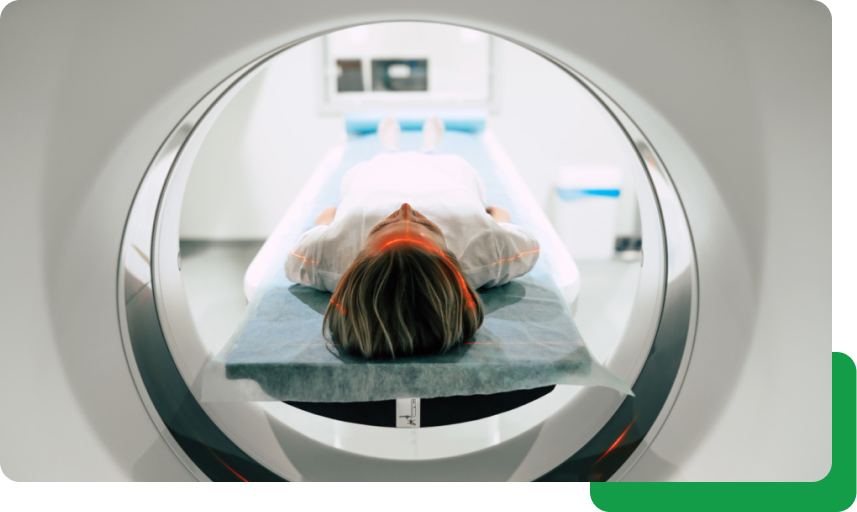
Nuclear medicine is a specialized area of radiology that uses very small amounts of radioactive materials, or radiopharmaceuticals, to examine organ function and structure. It is often used to help diagnose and treat abnormalities very early in the progression of a disease, such as thyroid cancer.

Because X-rays pass through soft tissue, such as intestines, muscles, and blood vessels, these tissues are difficult to visualize on a standard X-ray, unless a contrast agent is used. This allows the tissue to be seen more clearly. Nuclear imaging enables visualization of organ and tissue structure as well as function. The extent to which a radiopharmaceutical is absorbed, or “taken up” by an organ or tissue may indicate the level of function of the organ or tissue being studied. Therefore, diagnostic X-rays are used primarily to study anatomy, whereas nuclear imaging is used to study organ and tissue function.


Nuclear Medicine

Nuclear medicine is a specialized area of radiology that uses very small amounts of radioactive materials, or radiopharmaceuticals, to examine organ function and structure. It is often used to help diagnose and treat abnormalities very early in the progression of a disease, such as thyroid cancer.

Because X-rays pass through soft tissue, such as intestines, muscles, and blood vessels, these tissues are difficult to visualize on a standard X-ray, unless a contrast agent is used. This allows the tissue to be seen more clearly. Nuclear imaging enables visualization of organ and tissue structure as well as function. The extent to which a radiopharmaceutical is absorbed, or “taken up” by an organ or tissue may indicate the level of function of the organ or tissue being studied. Therefore, diagnostic X-rays are used primarily to study anatomy, whereas nuclear imaging is used to study organ and tissue function.

Nuclear medicine is a specialized area of radiology that uses very small amounts of radioactive materials, or radiopharmaceuticals, to examine organ function and structure. It is often used to help diagnose and treat abnormalities very early in the progression of a disease, such as thyroid cancer.

Because X-rays pass through soft tissue, such as intestines, muscles, and blood vessels, these tissues are difficult to visualize on a standard X-ray, unless a contrast agent is used. This allows the tissue to be seen more clearly. Nuclear imaging enables visualization of organ and tissue structure as well as function. The extent to which a radiopharmaceutical is absorbed, or “taken up” by an organ or tissue may indicate the level of function of the organ or tissue being studied. Therefore, diagnostic X-rays are used primarily to study anatomy, whereas nuclear imaging is used to study organ and tissue function.

Nuclear medicine scans are used to diagnose many medical conditions and diseases. Some of the more common tests include the following:

  • Renal Scan: This is used to examine the kidneys and to find abnormal function or obstruction of the renal blood flow.
  • Thyroid Scan: This is used to evaluate thyroid function or to better evaluate a thyroid nodule or mass.
  • Bone Scan: This is used to evaluate any degenerative and/or arthritic changes in the joints, to find bone diseases and tumors, and/or to determine the cause of bone pain or inflammation.
  • Gallium Scan: This is used to diagnose active infectious and/or inflammatory diseases, tumors and abscesses.
  • Heart Scan: This is used to identify abnormal blood flow to the heart, to determine the extent of the damage of the heart muscle after a heart attack, and/or to measure heart function.
  • Breast Scan: This is often used in conjunction with mammograms to locate cancerous tissue in the breast.
  • VQ Lung Scan: A ventilation–perfusion (VQ) scan is used to examine airflow (ventilation) and blood flow (perfusion) in the lungs.

Google Reviews

First time here, great experience. Staff were very friendly and professional. Will be back. – JUSTIN G.

Same-Week Appointment

Google Reviews

First time here, great experience. Staff were very friendly and professional. Will be back. – JUSTIN G.