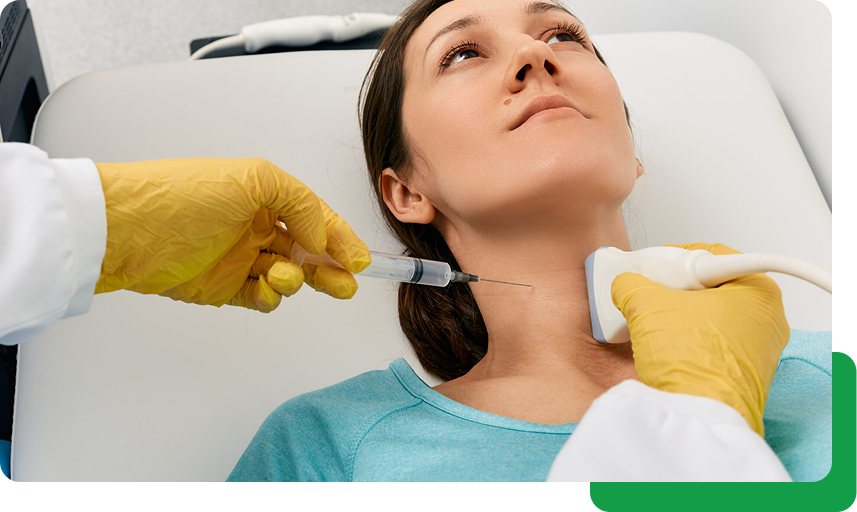
 A needle biopsy is a procedure to obtain a sample of cells from your body for laboratory testing. Needle biopsy may be used to take tissue or fluid samples from muscles, bones, and other organs, such as the liver or lungs. Common types of needle biopsy techniques include:
- Fine Needle Aspiration: This type of needle biopsy uses a thin, hollow needle to draw cells from your body.
- Core Needle Biopsy: This type of needle biopsy uses a wider needle than fine-needle aspiration. The needle used during a core needle biopsy is a hollow tube that allows the doctor to extract a core of tissue for testing.
The sample from your needle biopsy may help your doctor determine what’s causing:
- A mass or lump: A needle biopsy may reveal whether a mass or lump is a cyst, an infection, a benign tumor or cancer.
- An infection: Analysis from a needle biopsy can help doctors determine what germs are causing an infection so that the most effective medications can be used.
- Inflammation: A needle biopsy sample may reveal what’s causing inflammation, and what types of cells are involved.
You may also undergo imaging tests, such as a computerized tomography (CT) scan or an ultrasound, before your needle biopsy. Sometimes these tests are also used during the needle biopsy procedure to more accurately locate the area to be biopsied.